
Answers to Common Traveler Questions
FAQ
Find the Answer from Us
Welcome to our FAQ section, where we answer common questions about our tours across Indonesia's top destinations. If you can’t find the answer you’re looking for, feel free to reach out to us directly for personalized assistance!
Lampaloka is a tour company offering tailor-made and ready-made travel experiences across Indonesia. We focus on authentic, comfortable, and well-organized trips that connect travelers with the best of each destination.
We provide a variety of tours including shared, private, adventure, and cultural experiences. Our coverage includes Bali, East Java, Yogyakarta, West Java, Labuan Bajo, Kalimantan, Sumatra, and other top destinations.
- Flexible Travel Options – Choose from shared or private tours that fit your travel style.
- Reliable Team – English-speaking drivers and experienced guides where available.
- Comfort & Safety First – Enjoy well-maintained vehicles and trusted local partners.
- Seamless Planning – From itinerary creation to on-ground support, we handle the details so you can focus on the experience.
You can easily book through our website or contact our travel specialists by email or direct chat. Our team will help you plan and confirm your trip efficiently.
Yes. Lampaloka can tailor itineraries based on your interests, timeline, and preferences. Simply share your ideas with our team.
Cancellation terms may vary depending on the tour. In general:
- Full refund for cancellations made at least 30 days before departure.
- Partial refund for cancellations 15–30 days before departure.
- No refund for cancellations within 14 days of departure.
We highly recommend travel insurance, especially for adventure-based trips such as mountain trekking, jungle expeditions, or marine activities.
Yes. Solo travelers can join shared tours or request a private arrangement when available.
Most multi-day tours include both. Specific inclusions are listed in each package description.
Yes. Our team members are English-speaking and trained to assist guests with professionalism and care.
Yes, airport transfers are available for most destinations and can be added to your booking.
Yes. Many Lampaloka tours are family-friendly, and we can adjust the itinerary and activities for children.
It depends on your destination. For example, light clothing and sunscreen for Bali, warm jackets for Bromo, and trekking gear for jungle or mountain trips. A detailed list will be provided after booking.
The dry season (April–October) is ideal, though travel is possible year-round depending on your destination and activity type.
Yes. We collaborate with local communities and promote responsible, eco-conscious tourism to protect Indonesia’s natural and cultural heritage.
We accept payments through bank transfer, PayPal, and international digital wallets such as Wise and Revolut.
Yes. You can pay securely via PayPal using major credit or debit cards without needing a PayPal account.
Most tours require a deposit to confirm your booking, with the remaining balance due before the tour starts. The exact payment terms are stated on each tour page or in your confirmation email.
Deposit amounts vary by tour but are typically 30–50% of the total package price.
The remaining balance is usually due 7–14 days before your tour date, unless otherwise stated in your booking details.
For selected destinations and tours, yes — but only with prior confirmation. Full cash payments on arrival are not always available, especially for multi-day or remote-area tours.
All prices are listed in Indonesian Rupiah (IDR) unless stated otherwise. For international payments, the amount will automatically convert based on your payment platform’s exchange rate.
Bank or digital wallet transfer fees are the responsibility of the sender. We recommend using Wise or Revolut for lower fees and better exchange rates.
Once payment is confirmed, we’ll send a booking confirmation email and official receipt within 24 hours.
Yes. Lampaloka only uses trusted and encrypted payment platforms to ensure all transactions are safe and verified.
Refund eligibility depends on our cancellation policy stated in your tour confirmation. Please refer to the General FAQ or your booking details for more information.
Yes. We can provide official invoices for corporate or group bookings upon request.
Our package includes hotel pick-up, transportation, entrance tickets, a local guide, and bottled water. Add-ons such as Prambanan visits or meals can be arranged upon request.
Yes, it’s possible to access the upper levels (up to the 9th floor), but tickets are limited and depend on availability. Advance booking is required, and please note that the temple is closed every Monday for maintenance.
Early morning is ideal to enjoy a calmer atmosphere and softer light for photography. The best months are May to September when rainfall is lower.
The sunrise experience from Manohara or nearby viewpoints like Punthuk Setumbu Hill is still available, but it depends on weather conditions for visibility.
Most guests spend 1.5 to 2 hours exploring the temple, plus extra time if combined with nearby sites such as Mendut and Pawon temples.
Modest clothing is recommended — shoulders and knees covered — especially since Borobudur is a religious site. Comfortable shoes and a hat are also advised.
Yes, a licensed local guide is included in our tour to share the history, symbolism, and stories behind Borobudur’s intricate carvings.
Drone usage inside the Borobudur complex is not permitted without prior approval. For aerial shots, please consult our team — we can advise safe and allowed areas nearby.
The base area is accessible, but the upper levels require climbing steep steps. We can adjust the route or provide assistance for guests with mobility limitations.
Yes, there are cafes and local stalls outside the temple complex. We can also recommend nearby restaurants with scenic views.
Yes, it’s possible to combine both temples in a single tour. The drive between them takes around 1.5 hours, and we’ll plan the route to make the most of your time.
Yes, modest attire is required. Sarongs are often provided at the entrance if needed.
A hat, sunscreen, comfortable shoes, camera, and refillable water bottle are recommended.
Yes, it’s open daily except on Mondays, when it closes for maintenance.
Yes, pick-up and drop-off are available from Yogyakarta, Magelang, or surrounding areas.
Yes, photography is allowed on all accessible levels. Please be respectful during prayers or ceremonies.
Built in the 9th century, Borobudur is the world’s largest Buddhist temple, symbolizing the path to enlightenment through its nine stacked platforms and thousands of stone reliefs.
Yes, there’s a souvenir market just outside the exit gate offering local crafts, batik, and traditional snacks.
The tour continues as planned with minor adjustments. We provide umbrellas and ensure your comfort throughout.
For sunrise experiences, pick-up usually starts between 3:00 – 4:00 AM depending on your hotel location. Regular tours start later in the morning.
Yes, the site is family-friendly, though we recommend supervision for younger kids when climbing steps.
Currently, Borobudur closes before sunset. However, evening visits can be arranged for special events or with local permission.
Bukit Lawang is famous for its wild orangutans and jungle trekking experiences inside the UNESCO-listed Gunung Leuser National Park.
Yes. The treks often encounter semi-wild or wild orangutans. While sightings aren’t 100% guaranteed, chances are very high with experienced guides.
- 1D Trek: Short introduction to the rainforest and orangutans, returning by river tubing.
- 2D1N Trek: Deeper exploration with camping overnight in the jungle.
- 3D2N Trek: Extended adventure with more wildlife, rivers, and relaxation time.
- 4D3N Trek: The most immersive experience for nature lovers wanting full jungle immersion.
Yes, it’s mandatory to join a licensed guide for all treks to ensure safety and wildlife protection.
Moderate fitness is needed. Expect uneven terrain, steep climbs, and humid conditions. Guides adjust the pace based on the group.
Besides orangutans: Thomas leaf monkeys, gibbons, macaques, hornbills, peacocks, and occasionally slow lorises or snakes.
Guided trekking, meals, fruits, drinking water, park permits, camping equipment (for overnight tours), and river tubing back to the village.
Light quick-dry clothes, hiking shoes, rain jacket, insect repellent, small backpack, reusable bottle, and a headlamp for overnight treks.
Mostly during the rainy season (Oct–Apr). Wearing long trousers, bringing Leech socks and repellent are recommended; guides usually carry salt to remove them easily.
Freshly cooked by your guide team — rice, vegetables, chicken, tempeh, and local fruit. Vegetarian and vegan options available.
Basic but clean, with waterproof tarps or tents, mats, and mosquito nets. You’ll sleep beside rivers or waterfalls in the heart of the jungle.
Yes, most campsites are near rivers where you can swim or wash — it’s one of the highlights after a long trek.
Dry season (May–September) is most comfortable. Rainy season offers greener views and more wildlife activity but muddier paths.
Rain is part of the jungle experience — guides bring covers and adjust routes for safety. Treks continue unless the weather is extreme.
Yes. Solo travelers often join small mixed groups. Guides ensure safety and companionship throughout the trek.
For the 1D trek, yes — if they’re comfortable with hiking. Multi-day treks are better for ages 10+ due to terrain difficulty.
No signal during treks. Limited Wi-Fi is available in Bukit Lawang village before or after your adventure.
No, bring enough cash from Medan. Some lodges may offer card payments with surcharge.
Small-group, eco-friendly treks led by local guides who grew up in the area — giving you an authentic, respectful wildlife experience.
We recommend bringing warm clothing (it can get cold at night), comfortable hiking shoes, a hat, sunglasses, sunscreen, a camera, and some snacks.
The highest point of Mount Ijen is 2,799 meters (9,183 feet) above sea level.
The best time to visit Mount Ijen is during the dry season, which runs from May to September. During this period, the weather is perfect for watching blue fire and trekking.
The best time to visit Mount Ijen is during the dry season, which runs from May to September. During this period, the weather is perfect for watching blue fire and trekking.
The level of difficulty for hiking Mount Ijen is moderate. The hike is around 3 kilometers long and takes approximately 1.5 to 2 hours to reach the summit. Therefore, it's essential to be physically fit and prepare adequately for the hike.
Visitors should wear comfortable clothes and sturdy shoes for the hike. It is also recommended to bring a jacket or sweater as it can get quite cold at night.
There are no specific age restrictions but the hike can be challenging for very young children or elderly individuals. Children under the age of 12 must be accompanied by an adult.
Yes, visitors can see the famous blue fire at Mount Ijen. The best time to see it is during the early morning hours before sunrise.
Wearing sneakers is okay, but flip-flops are not recommended. Sneakers provide better support and protection for your feet, especially on the rocky and uneven terrain you may encounter during the tour.
If it’s raining, the tour may still proceed, but conditions can be more challenging. Visibility might be reduced, and the trail can become slippery. While it’s possible to see the blue fire in the rain, it may not be as clear or as impressive as on a dry night.
You can reach us via email at bromocheap@gmail.com or call us at +6285186663911 . We are happy to answer any additional questions you may have.
Jomblang Cave is a vertical sinkhole with a magical light beam known as the “Heaven’s Light.” Around midday, sunlight pierces through the cave opening, creating a breathtaking natural spotlight.
Jomblang Cave is about 60 meters deep, and visitors are lowered down using a single rope system handled by trained local operators.
Yes, safety gear (harness, helmet, boots) and professional assistance are provided. The system is well-managed, but those with severe vertigo should reconsider.
Wear comfortable clothes that you don’t mind getting muddy, along with closed shoes or provided rubber boots. Bring a change of clothes for after the cave exploration.
The Jomblang experience usually lasts 2–3 hours, including briefing, descent, exploration, and ascent back to the surface.
Between 10:00 a.m. – 12:00 p.m. when sunlight enters the cave at the perfect angle. Timing is crucial, so tours depart early from Yogyakarta.
Yes, you don’t need caving experience. The guides and staff assist during descent and ascent, ensuring it’s manageable for first-timers.
Generally, participants should be between 10–65 years old and under 100 kg (220 lbs) due to harness and rope safety limits.
It’s muddy and slippery, especially during rainy season. You’ll walk through damp areas and need to crouch in some sections.
Yes, basic toilets and washing areas are available near the starting point, along with a simple lunch spot provided after caving.
Besides Jomblang Cave, the trip includes Pindul Cave tubing and Timang Beach Gondola, offering a mix of adrenaline, nature, and ocean scenery in one day.
Yes, but protect it from mud and moisture. A waterproof case or GoPro is highly recommended for capturing the light beam moment.
It’s usually open daily, but access can close during heavy rain or maintenance for safety. Booking ahead helps ensure availability.
Absolutely — that’s part of the fun. Expect to come out muddy from head to toe, so extra clothes are essential.
Pick-up is usually around 6:00–7:00 a.m. to reach the cave early and catch the light at the right time.
Yes, a simple local meal (usually rice, chicken, and vegetables) is included after the Jomblang activity.
The descent may be challenging, but guides are reassuring and experienced. Many first-timers overcome their fear once they see the light below.
Not recommended. Daily visitor slots are limited, so advance booking ensures your spot and proper gear setup.
Yes, but conditions are muddier and more slippery. If heavy rain makes it unsafe, tours might be postponed.
It’s one of Indonesia’s most unique natural wonders — combining adrenaline, beauty, and raw adventure you won’t find anywhere else.
Karimun Jawa is a tropical paradise of 27 islands known for crystal-clear waters, vibrant coral reefs, and serene island life — perfect for snorkeling, island hopping, and beach relaxation.
From Semarang, it takes about 2.5–3 hours by fast boat. From Yogyakarta, we’ll travel by land to Jepara (around 4–5 hours) and continue by ferry or fast boat to the islands.
Boat schedules depend on weather and sea conditions. We always adjust the itinerary accordingly and keep guests updated in real-time.
Our tour includes transportation (land and sea), accommodation, meals, snorkeling gear, island-hopping activities, and local guide assistance.
You’ll stay in a comfortable hotel, depending on the package type and availability. All accommodations are clean and locally managed.
You’ll stay in a comfortable hotel, depending on the package type and availability. All accommodations are clean and locally managed.
You’ll enjoy snorkeling with colorful corals and fish, swimming with baby sharks, island hopping, relaxing on white sandy beaches, and watching sunset views.
Typical stops include Menjangan Kecil, Menjangan Besar, Cemara Besar, and Geleang Island, but routes may vary slightly based on the weather.
Absolutely. We provide life jackets, masks, and local guides to assist even first-time snorkelers safely.
Bring swimwear, sunscreen, hat, sunglasses, towel, waterproof phone case, and personal medication. Don’t forget a dry bag for your belongings during island hopping.
ATMs are limited, and card payments are rare. Bring enough cash before departure.
The best season is April to October when seas are calm, skies are clear, and snorkeling visibility is excellent.
Yes, but boat departures are sometimes delayed or canceled due to rough seas. We’ll inform guests promptly and reschedule when necessary.
Currently, no regular flights are available. The only access is by boat from Jepara or Semarang.
We provide local meals, usually fresh seafood, vegetables, and rice. Vegetarian options can be arranged upon request.
Electricity runs 24 hours in most areas, but Wi-Fi can be unstable. We recommend enjoying the island’s natural digital detox.
Yes. You can wear a life jacket and still enjoy the water activities safely under our guide’s supervision.
Yes, but please fly responsibly and avoid disturbing marine life or local communities.
Yes, but please fly responsibly and avoid disturbing marine life or local communities.
The 2D1N tour is a quick escape focused on snorkeling and island hopping, while the 3D2N version adds extra relaxation time, more islands, and sunset experiences.
Yes, Karimun Jawa is a marine national park. Avoid touching corals, don’t collect shells, and never litter to help preserve its fragile ecosystem.
Because it’s one of Indonesia’s hidden gems — uncrowded, naturally stunning, and offering authentic island charm just a few hours from Java.
Ketambe is part of the Gunung Leuser National Park in Aceh, Sumatra — one of the best places in Indonesia to see wild orangutans and experience true rainforest adventure away from mass tourism.
All tours include transportation from Ketambe or nearby areas, certified jungle guides, permits, meals, camping equipment (for overnight treks), and drinking water.
The 1D tour and 1D trek focus on short wildlife spotting and local exploration, while the 2D1N to 4D3N treks offer a deeper jungle experience, with camping, river crossings, and higher chances of seeing orangutans and other wildlife.
Sightings are not guaranteed as they live in the wild, but our local guides are highly experienced, and chances of seeing orangutans and other primates are very high in this region.
The trails range from easy to moderate, depending on the package. Expect humid weather, slippery paths, and river crossings — suitable for travelers with reasonable fitness levels.
You’ll stay in simple jungle camps near rivers or forest clearings. Tents, sleeping mats, and mosquito nets are provided for your comfort.
Our team prepares freshly cooked local meals — rice, vegetables, tempeh, eggs, noodles, and fruit. Vegetarian or vegan meals can be arranged upon request.
No need — we provide all essential camping and cooking gear. You only need personal items like hiking shoes, insect repellent, dry clothes, toiletries, and a reusable water bottle.
No need — we provide all essential camping and cooking gear. You only need personal items like hiking shoes, insect repellent, dry clothes, toiletries, and a reusable water bottle.
Yes! Some routes pass by natural rivers and hot springs where you can take a refreshing dip. Your guide will let you know when it’s safe.
We recommend participants be at least 12 years old and in good health. Families with teenagers are welcome for shorter treks.
Yes, the Ketambe Village 1D Tour includes cultural interaction with locals, learning about traditional lifestyles, and visiting scenic spots around the village.
The best season is from May to September, when the trails are drier and the weather is more predictable.
The nearest airport is Kutacane or Medan. From Medan, it’s about an 8–10 hour drive. We can help arrange private transfers upon request.
Yes, our guides are licensed and trained in jungle safety and first aid. You’ll be briefed before departure on how to stay safe and comfortable during the trek.
Electricity is only available before and after the trek. Bring a power bank if you’d like to take photos during your journey.
We keep our treks small — usually 4–6 guests per guide to ensure a more personal and environmentally responsible experience.
The trek continues with adjustments for safety. Our guides carry ponchos and waterproof covers for your belongings.
Absolutely. We can adjust the duration, route, or focus — whether you want more wildlife encounters, riverside camping, or village interaction.
Yes. We collaborate with local Ketambe guides and ensure part of your tour directly supports the village economy and rainforest conservation efforts.
Yes, private treks are available upon request for those who prefer a more flexible schedule or private experience.
It’s best to book at least 1–2 weeks in advance to secure guide availability and permit arrangements.
We highly recommend having travel insurance that covers trekking and outdoor activities in remote areas.
If you need to stop early due to fatigue or health, our guide will escort you safely back to basecamp. Partial refunds are not available once the trek begins.
Trekking through untouched rainforest, hearing gibbons at dawn, and possibly spotting wild orangutans swinging above you — it’s pure jungle magic.
You’ll travel from Jakarta to explore the legendary Krakatoa volcano by speedboat. The tour combines volcanic sightseeing with snorkeling around nearby islands known for their clear water and coral reefs.
The 1-day tour is perfect for those short on time — you’ll visit Krakatoa and enjoy snorkeling before returning to Jakarta the same day. The 2D1N tour includes an overnight stay on Sebesi Island, offering a slower pace and more time to explore and relax.
Please be aware that access to the summit of Anak Krakatoa may not always be possible. Entry depends on volcanic activity, weather conditions, and regulations by local authorities. For safety reasons, routes may be limited to coastal or lower areas.
Yes, Krakatoa is an active volcano. We continuously monitor updates from the Geological Agency, and tours only operate when conditions are deemed safe.
Safety is our top priority. We operate under strict safety protocols, coordinate with local authorities, and only run tours when it’s safe to approach the volcano and surrounding islands.
The tour starts from the coastal town of Carita, reachable from Jakarta in about 3–4 hours by car. We can arrange private transfers from Jakarta to Carita for your convenience.
The journey from Carita to Krakatoa takes approximately 1.5–2 hours, depending on sea conditions.
You’ll visit Krakatoa, explore nearby volcanic islands, go snorkeling in crystal-clear waters, and, on the overnight trip, enjoy a relaxing stay on Sebesi Island.
Yes, all meals are included throughout the tour — freshly prepared Indonesian dishes with seafood, rice, vegetables, and tropical fruits.
Yes, we can accommodate dietary needs with prior notice.
The best season is between April and October when the sea is calmer and visibility for snorkeling is best.
Comfortable clothing, swimwear, hat, sunscreen, sunglasses, personal medication, waterproof bag, and camera. We provide snorkeling gear, life jackets, and drinking water.
No, snorkeling spots are suitable for beginners. Our team provides safety instructions and assistance throughout the activity.
In case of strong winds or unsafe sea conditions, we may adjust the schedule, switch to alternative activities, or postpone the trip to ensure your safety.
The 1D tour usually departs early morning around 5:00 AM from Jakarta, while the 2D1N tour allows a more flexible start depending on transfer arrangements.
Signal coverage is limited around Krakatoa and Sebesi Island. We recommend informing family or colleagues in advance that you’ll be offline during the trip.
Yes, all necessary permits, entry fees, and conservation charges are included in the tour package.
Life jackets and snorkeling equipment are provided, and our crew supervises the activity closely to ensure everyone’s safety.
Children above 10 years old are welcome, provided they are comfortable on a boat and supervised by parents at all times.
Yes, private tours can be customized — for example, adding more snorkeling time, beach exploration, or extra nights on Sebesi Island.
Speedboats are equipped with basic facilities. For comfort, we also schedule stops at Sebesi Island or nearby beaches.
Our guides speak fluent English and Indonesian, and they’re experienced in explaining Krakatoa’s geological history and local stories.
It’s one of the world’s most iconic volcanoes — a living reminder of nature’s power and beauty. You’ll witness raw volcanic landscapes, marine life, and unforgettable island views all in one trip.
Our Labuan Bajo package includes hotel pick-up, boat trips to Komodo National Park, entrance fees, local guide service, snorkeling gear, and meals during the island tour. Accommodation and flights can be added upon request.
The best months are April to November, during the dry season — calm seas, clear skies, and great visibility for diving and island-hopping.
Yes, all our island-hopping tours include stops at Komodo or Rinca Island, where you’ll be guided by certified rangers to safely see Komodo dragons in their natural habitat.
We offer both. You can join a shared boat tour or upgrade to a private trip for a more exclusive experience.
A 1-day tour covers major highlights like Padar Island, Komodo Island, and Pink Beach. Multi-day tours include overnight stays on the boat or in Labuan Bajo for a slower, more immersive experience.
Yes, lunch is included for day trips, and all meals are provided for liveaboard or overnight tours. Vegetarian or special requests can be arranged in advance.
Yes, snorkeling gear is included in all boat tours. Diving gear is available for rent on request.
Absolutely. Labuan Bajo is one of Indonesia’s top diving destinations. We can organize fun dives or dive-focused itineraries with certified instructors.
Expect manta rays, sea turtles, reef sharks, and vibrant coral gardens. Manta Point and Siaba Besar are among the best spots.
Yes, all boats are inspected regularly and operated by experienced local crews. Safety gear such as life jackets is always provided.
We work with selected hotels and resorts in Labuan Bajo and can also arrange liveaboard stays for multi-day tours.
Yes, our tours are family-friendly. We can adjust the itinerary to match your comfort and preferences.
The easiest way is by flying from Bali (DPS) directly to Labuan Bajo Airport (LBJ). We can help with flight coordination.
13
Lightweight clothes, swimwear, reef-safe sunscreen, sunglasses, a hat, power bank, and sturdy shoes for trekking on Komodo or Padar Island.
Yes, island-hopping tours often include short hikes, especially at Padar Island, for panoramic sunrise or sunset views.
Drones are allowed in most areas except near Komodo dragons. Always ask your guide or park ranger before flying.
Wi-Fi is not available on boats, but you’ll have mobile coverage when near Labuan Bajo town.
For safety, routes may be adjusted if sea conditions are rough. We’ll always provide safe and enjoyable alternatives.
For safety, routes may be adjusted if sea conditions are rough. We’ll always provide safe and enjoyable alternatives.
Travel insurance is optional but recommended, especially if you plan to dive or join multi-day tours.
They are wild animals, but encounters are safe when you follow ranger instructions. Never approach them without your guide.
Alcohol is allowed in moderation. Please drink responsibly, especially during boat trips.
Yes, solo travelers are welcome! You can join shared tours or request a private experience.
Yes, it’s a small, friendly town. You can explore restaurants and cafes safely, but take normal precautions as in any destination.
Lovina is best known for its calm beaches, dolphin sightings at sunrise, and laid-back northern Bali atmosphere far from the busy south.
Dolphin watching typically starts around 6:00 AM, just after sunrise, when the sea is calm and dolphins are most active.
Dolphin sightings depend on nature, but chances are high — around 80–90% on most days.
We use traditional wooden boats (jukung) operated by experienced local fishermen who know the routes well.
Yes, the waters are generally calm, especially in the morning. Safety equipment such as life jackets is provided.
Yes, snorkeling is possible after dolphin watching — the coral reefs near Lovina offer colorful marine life and clear visibility.
The best months are from April to October, during Bali’s dry season when the sea is calm and weather is clear.
Lovina is usually sunnier and drier than Ubud or Seminyak, with a slightly cooler breeze, especially in the morning.
Yes, Lovina’s calm sea, relaxed pace, and quiet environment make it ideal for families and older visitors.
Yes, Lovina’s calm sea, relaxed pace, and quiet environment make it ideal for families and older visitors.
You can visit Banjar Hot Springs, Gitgit or Sekumpul Waterfalls, and Brahma Vihara Arama — all within a short drive from the beach area.
Mount Argopuro is known as one of the longest trekking routes in Java, offering diverse landscapes — from mystical ruins and mountain lakes to wild savannas and dense forests.
It’s a moderate to challenging trek, best for those with good physical fitness or previous hiking experience. The trails are long but rewarding, with scenic campsites along the way.
The 3D2N trek is faster-paced and suitable for those with limited time, while the 4D3N trek provides a more relaxed pace with longer rest stops and extended scenic exploration.
We include transportation from Surabaya or Malang, camping equipment, local mountain guide, porter service, meals, and national park entry permits.
The ideal period is May to October during the dry season. The trail is clearer, and camping conditions are more comfortable.
We typically begin from Baderan Village (Probolinggo side) and finish in Bremi or Baderan, depending on the route chosen and weather conditions.
The Argopuro trek spans around 40 kilometers, usually taking 3 to 4 days depending on the pace and weather.
Notable spots include Rengganis Site, Taman Hidup Lake, Cikasur Savanna, and the mysterious Ratu Baka ruins, each with its own story and scenery.
Yes, our team prioritizes safety. We monitor weather and trail conditions daily, and our guides are trained in mountain first aid and emergency handling.
We provide tents, sleeping bags, mats, cooking gear, and eating utensils. You only need to bring your personal essentials.
Bring a small backpack, warm clothes, trekking shoes, headlamp, raincoat, power bank, toiletries, and personal medicine. Avoid overpacking due to long trekking distances.
Yes, porter service is included to help carry shared equipment and supplies. Personal carrier should be kept light.
Daytime temperatures range between 15–25°C, while at night it can drop to 5–10°C, especially near the campsites.
We recommend Argopuro for those with previous hiking experience. It’s not technical, but endurance and stamina are essential due to its long route.
Yes, you may spot wild boars, deer, monkeys, and rare birds. Always maintain distance and respect the ecosystem.
Yes, water sources are available in certain areas, but we carry extra reserves for convenience and safety.
Locals believe Argopuro was once the home of Dewi Rengganis, a legendary princess whose ruins can still be found at Rengganis Site — adding a mystical charm to the hike.
At the end of the trek, our vehicle will pick you up and transfer you back to Surabaya directly.
Yes, we can customize the itinerary for shorter versions focusing on certain highlights like Taman Hidup Lake or Cikasur Savanna.
Because it’s one of the most complete mountain adventures in Java — combining nature, culture, and mystery in one unforgettable expedition.
This trek offers an adventurous climb through East Java’s volcanic range, combining scenic forests, sulfur fields, and panoramic summits. Depending on your chosen route, you’ll conquer Mount Arjuno, Mount Welirang, or both.
The Tretes route is more established and suitable for those who enjoy long but steady climbs. The Sumberbrantas route is shorter but steeper and known for its peaceful scenery and pine forests.
It’s considered a moderate to challenging trek depending on your fitness level and chosen route. You’ll hike for 6–8 hours per day with altitude gain and steep terrain.
All packages include transportation, professional mountain guide, porter team, camping equipment, meals during the trek, permits, and mountain entrance fees.
Not necessarily, but a good fitness level is required. Beginners with basic stamina can join shorter routes like the 2D1N Arjuno trek.
Mount Arjuno (3,339 m) is known for its stunning sunrise views and vast summit area. Welirang (3,156 m) is an active volcano with visible sulfur vents — it’s slightly lower but more rugged.
Yes. The 3D2N Arjuno-Welirang package allows you to summit both peaks if weather and time permit.
The best season is from April to October, during the dry season, when the trails are stable and visibility is clear.
It can drop to 5–10°C at night. Warm clothing, gloves, and a windproof jacket are highly recommended.
It can drop to 5–10°C at night. Warm clothing, gloves, and a windproof jacket are highly recommended.
You’ll stay overnight in a tent at designated campsites near the base of the summit. All camping equipment and sleeping bags are provided.
Basic portable toilets are set up at the campsites, but facilities are limited. We recommend bringing personal hygiene kits and biodegradable tissues.
We serve freshly cooked Indonesian-style meals: rice, vegetables, eggs, tempeh, noodles, and coffee or tea. Vegetarian options are available upon request.
Each group is led by an experienced mountain guide with porters to carry logistics, tents, and cooking equipment. You only carry your personal daypack.
Each group is led by an experienced mountain guide with porters to carry logistics, tents, and cooking equipment. You only carry your personal daypack.
Hiking shoes, warm layers, headlamp, personal medicine, rain jacket, hat, sunscreen, and water bottle. We’ll send you a complete packing checklist before departure.
We typically start early in the morning (around 7:00 AM) from the basecamp to make the most of daylight and weather conditions.
Yes, you can leave your non-essential luggage safely at the basecamp or our partner guesthouse.
If conditions are unsafe, the guide may adjust the route, delay the summit attempt, or descend early. Safety is always the top priority.
Yes, all climbers must be registered with the national park office. We handle all permits and documentation before your trek.
The signal is weak or unavailable on most sections. We recommend informing family or colleagues before the trek.
Absolutely. We can arrange private expeditions, adjust duration, or combine routes based on your fitness level and interests.
Participants should be 12 years or older and physically fit. Those under 18 must be accompanied by a guardian.
We limit our trekking groups to 6–8 people per guide for safety and a more personal experience.
The feeling of conquering two majestic volcanoes, witnessing surreal volcanic landscapes, and standing above the clouds at sunrise — it’s one of East Java’s finest adventures.
If you need to stop early due to fatigue or health reasons, our guide will ensure your safe descent with porter support. Partial refunds are not available once the trek begins.
The adventure starts early around 2:00–2:30 AM (depending on your hotel location) to reach the sunrise point before dawn.
No hiking is required. You’ll ride a 4WD jeep all the way up to the sunrise viewpoint near Mount Batur’s crater area.
The package includes round-trip transfers, jeep ride, local guide, entrance fees, and light breakfast with coffee or tea.
Yes. All jeeps are operated by experienced local drivers familiar with the volcanic terrain. Safety checks are done regularly.
Bring a warm jacket, comfortable shoes, and camera. The temperature at the top can be quite cold before sunrise.
The entire experience takes around 6–7 hours, including travel from and back to your accommodation.
Yes, after sunrise, you can continue by jeep to the Black Lava and Black Sand areas near the active crater zone.
Sunrise visibility depends on weather conditions. Even on cloudy days, the jeep ride and volcanic scenery remain worth the visit.
Basic toilet facilities are available near the parking area at the base and selected viewpoints.
Yes. Since no hiking is required, this tour is ideal for families, kids, or travelers who prefer a relaxed sunrise experience.
Yes, many guests choose to add a hot spring visit after the sunrise adventure. You can request it when booking.
Yes, you may use drones, but please follow local regulations and respect other visitors’ space.
In case of volcanic alerts, we’ll inform you immediately and offer rescheduling or alternative activities.
Yes, the jeep tours are limited and sunrise spots are popular, so advance booking is recommended.
The standard Mount Bromo tour typically lasts for about 12 hours, starting in the early morning to catch the sunrise and ending in the afternoon.
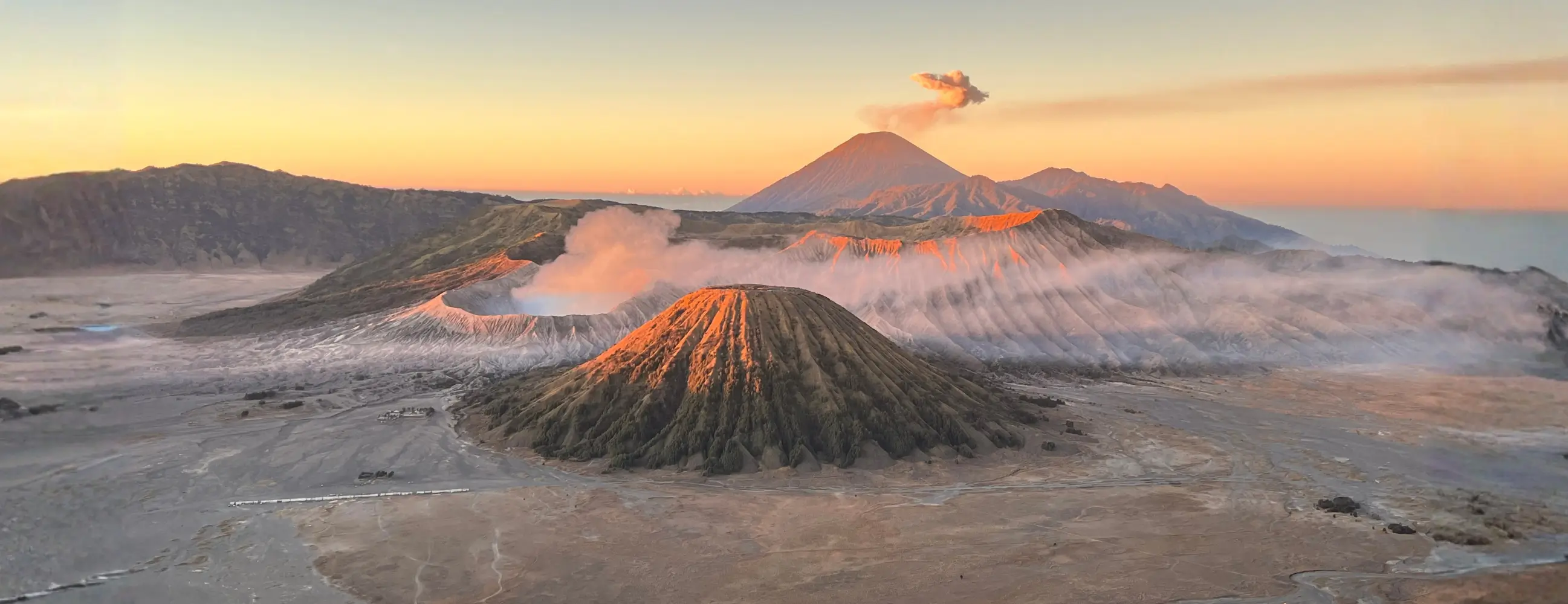
Mount Bromo can get quite chilly, especially during the early morning hours when visitors typically go to see the sunrise. Temperatures can range from 4°C to 10°C (36°F to 50°F) before dawn. It's advisable to dress in layers and bring warm clothing, such as a jacket, hat, and gloves, to stay comfortable.
We recommend bringing warm clothing (it can get chilly), comfortable shoes, a hat, sunglasses, sunscreen, a camera, and some snacks.
The best time to visit Mount Bromo is during the dry season, which runs from May through September. This is when the weather is most favorable for hiking and viewing the sunrise.
If you're planning to visit Mount Bromo and are traveling from Bali, Lombok, or Borneo, the most convenient way to get there is by flying to Juanda International Airport in Surabaya. On the other hand, if you're traveling from Yogyakarta, taking a train is the best way to reach Mount Bromo. Both Surabaya and Malang have their own train stations, and trains from Yogyakarta regularly serve both stations.
The hike up Mount Bromo is considered to be relatively easy, and it can be completed by people of all ages and fitness levels. The trek takes around 30-45 minutes, depending on your speed and physical condition. As long as you are prepared and take your time, you should be able to complete the trek with ease and fully enjoy the breathtaking views that this natural wonder has to offer.
Yes you can! This can actually be a great advantage for those who do choose to visit during Ramadan. With fewer tourists around, you'll be able to enjoy the natural beauty of the mountain without feeling rushed or crowded. This is because many local tourists prefer to postpone their trips until after Ramadan, and so there are fewer people visiting Mount Bromo during this holy month.
It's important to wear comfortable clothing and sturdy shoes with good traction. Additionally, bring a warm jacket or sweater as it can be chilly at higher elevations.
We will still proceed with the tour even if it's raining. It could be a bit foggy for the sunrise and the view but nothing will beat the experience of walking through Sea of sand and climbing Mt Bromo Caldera.
Most of the volcanoes in Indonesia are pretty safe to travel. The government always observes the activity of each volcano. Especially for Mt Bromo, there have been close to none of cases where a sudden eruption happens. You can easily notice the smoke erupting from the caldera. White smoke means safe and darker ones means eruption is ongoing.
Wildlife that can be seen around the viewpoints are monkeys. Other than that, there was not any wildlife that you could encounter.
Yes, it is safe to travel with your children on Mt Bromo. Since Mt Bromo is a popular destination, many facilities such as 4WD Jeep, horse riding by the local tribe, shops around the viewpoints are presented to make sure everyone can go to Mt Bromo as a walk in a park.
Yes, it is also safe to travel with elders. 4WD Jeep, horse riding, and stairs on the caldera will help them a lot to climb Mt Bromo summit
Wearing sneakers is okay, but flip-flops are not recommended. Sneakers provide better support and protection for your feet, especially on the sandy and uneven terrain you may encounter during the tour.
You can reach us via email at bromocheap@gmail.com or call us at +6285186663911 . We are happy to answer any additional questions you may have.
Mount Buthak is a serene, less-crowded peak in East Java, offering panoramic views of neighboring mountains like Arjuno, Welirang, and Kawi. It’s perfect for trekkers who love peaceful trails and golden sunrise views from the summit.
Our 2D1N program includes a full-day hike to reach the campsite near the summit and an early morning climb for sunrise before descending the next day.
We usually start from Panderman Basecamp (Batu, Malang area), one of the most scenic and accessible routes to the top.
The Mount Buthak hike is considered moderate, suitable for beginners with good physical condition. The trail is mostly forested with steady uphill climbs.
Our package covers transport from Surabaya or Malang, guide, porter, camping gear, national park entry fee, meals, and water throughout the trip.
We typically leave early morning from Surabaya or Malang and return the next evening, depending on hiking pace and weather conditions.
The dry season (April–October) offers the best visibility, stable weather, and breathtaking sunrise views.
You’ll be rewarded with sweeping views of Mount Arjuno, Welirang, Kawi, and Semeru on clear days — a perfect panorama for photography.
Yes, one night of mountain camping near the summit is included, with all equipment prepared by our team.
Bring trekking shoes, a warm jacket, headlamp, raincoat, small backpack, and personal toiletries. We provide the rest.
Yes, there are a few natural springs along the route, but we supply bottled water for convenience.
Yes — Mount Buthak is beginner-friendly, and our local guide will set a comfortable pace with frequent rest stops.
The summit sits at 2,868 meters above sea level, making it one of East Java’s more approachable yet rewarding peaks.
Temperatures can drop to around 8–12°C, so warm clothing and sleeping bags are essential.
Yes, porter service is provided for carrying shared camping gear. Personal belongings should be kept lightweight.
Signal is limited or unavailable in most sections, so it’s best to inform family beforehand and enjoy the digital detox.
There are no permanent facilities — we use eco-friendly camp setups and practice Leave No Trace ethics.
The hike continues unless weather conditions are unsafe. We provide rain gear and waterproof tents to ensure comfort and safety.
Because it’s a hidden gem of East Java — peaceful, scenic, and less commercialized, offering a genuine mountain experience close to Malang and Surabaya.
Mount Merbabu is considered a moderate trek suitable for beginners with good fitness levels. The trail includes steady climbs, scenic ridges, and a rewarding summit view.
We usually take the Selo route, as it offers the most beautiful views and is ideal for a 2D1N itinerary. However, routes may vary depending on weather or park regulations.
The hike generally takes around 6–7 hours to reach the camping spot and about 4 hours to descend the next day.
Yes, we camp near the summit area at a scenic spot overlooking Mount Merapi and the surrounding valleys. This location offers incredible sunrise views.
The trek usually starts in the morning from Selo Basecamp after registration and briefing.
Sunrise depends on the weather. We always do our best to reach the viewpoint early, but visibility may vary.
Bring warm clothes, trekking shoes, a small backpack, and personal items. We provide tents, sleeping bags, and cooking equipment.
Yes, all meals during the trek are provided — typically dinner on day one and breakfast on day two.
Yes, porter service is included to carry camping gear. Guests only need to carry personal items and essentials.
We use high-quality tents and sleeping gear to ensure comfort and warmth during the night.
Electricity is not available on the mountain. Please bring a fully charged power bank.
Basic natural toilets are available near the campsite, but facilities are limited.
The best time is during the dry season (April to October) when trails are more stable and visibility is better.
Absolutely. We ensure all participants are grouped with guides and proper support.
Yes, many of our guests are first-time campers. Our team handles all logistics and camping arrangements.
Recommended for ages 10 and above with good health. Please inform us of any medical conditions in advance.
For safety reasons, we may reschedule or adjust the itinerary. Guests will be informed in advance.
Yes, it’s possible to customize the itinerary to 3D2N for a more relaxed pace or additional sightseeing.
Yes, we can arrange private transfers to and from Selo Basecamp at an additional cost.
No, we handle all necessary permits and national park fees.
Insurance is not included but strongly recommended.
Yes, please inform us in advance so our team can prepare suitable meals.
Temperatures can drop to around 5–10°C at the campsite, so bring layers and warm clothing.
This 2D1N camping experience combines the beauty of Mount Merbabu’s trails, a breathtaking sunrise, and full logistical support — perfect for adventurers seeking comfort and authenticity.
The trek starts either from Surabaya or Banyuwangi, depending on your selected package. Both routes meet at the base camp area near Kalibaru or Sumberwringin village.
Mount Raung is one of the most challenging volcano treks in Java. The trail is steep, rocky, and involves rope sections near the crater rim — suitable for experienced hikers or those in good physical condition.
Yes, the trek reaches the crater rim, offering dramatic views of Raung’s active crater. However, access to the inner rim depends on volcanic activity and weather conditions.
Our package includes transportation, camping gear, porter service, meals, guide assistance, and all necessary permits.
Yes, climbing permits are mandatory and handled by our team before departure.
The best months are between April and November, during the dry season. Climbing is not recommended during the heavy rainy months for safety reasons.
Camps are usually set up at Pos 7 or near the crater rim depending on the weather, timing, and physical condition of participants.
Camps are usually set up at Pos 7 or near the crater rim depending on the weather, timing, and physical condition of participants.
The full climb and descent take about 8–10 hours each way, spread across two or three days depending on the package.
Experience with high-altitude trekking or technical terrain is highly recommended. This is one of Indonesia’s tougher volcano climbs.
Bring a headlamp, trekking shoes, gloves, warm jacket, and personal items. We provide tents, sleeping bags, and cooking gear.
Yes, you can witness smoke, rumbling sounds, and sometimes lava glow from the rim, depending on the volcano’s activity level.
Safety is our top priority. The route is only opened when volcanic activity is within safe levels. Our guides monitor conditions closely.
Yes, freshly cooked meals are served by our porters and team throughout the expedition.
There are no permanent toilets on the mountain. Portable or natural-style toilets are arranged at each camp area.
Our treks begin from either Sembalun or Senaru villages, depending on your chosen route. Both are official entry points to Mount Rinjani National Park.
- Sembalun Route: Easier ascent, scenic grasslands, and direct access to the summit.
- Senaru Route: Starts with lush forest trails and descends through different scenery.
- Torean Route: Known for its natural beauty and hot springs, ideal for a unique descent.
Mount Rinjani is a challenging trek, especially the summit climb. It requires good fitness and endurance, but our experienced guides set a steady pace to make it achievable for most trekkers.
The summit stands at 3,726 meters (12,224 ft), making it Indonesia’s second-highest volcano.
The final summit push usually starts around 2:00 AM and takes 3–4 hours to reach the top for sunrise.
Camping tents are provided at designated campsites such as Sembalun Crater Rim, Segara Anak Lake, or Senaru Rim — depending on the route and duration of your trek.
Yes. Our local team prepares freshly cooked meals, snacks, and hot drinks throughout the hike. Vegetarian or dietary requests can be arranged.
The best season is April to November (dry season). The national park is closed from January to March due to heavy rain and safety concerns.
Yes, and we handle all permit arrangements, national park fees, and registration as part of your package.
Temperatures can drop to 5°C or lower at night. We recommend bringing warm layers, gloves, and a windproof jacket.
Swimming is allowed in certain areas but not recommended near the volcanic vent. Most trekkers enjoy relaxing at the hot springs next to the lake instead.
Yes, porters carry camping gear, food, and equipment. You only need to carry your personal daypack.
Warm clothing, trekking shoes, headlamp, sun protection, rain jacket, small backpack, toiletries, and personal medicine. We provide camping and cooking gear.
Basic portable toilets are available at campsites. For hygiene, we encourage eco-friendly wipes and quick-dry towels.
Yes, beginners with good physical fitness can join. We’ll match your route to your experience level.
Transport, guide, porters, meals, permits, camping gear, and drinking water. Flights or hotel stays before/after the trek can be added upon request.
Yes, all guides and porters are certified by Mount Rinjani National Park Authority and trained in first aid.
Our guides continuously monitor conditions. If the summit or certain areas become unsafe, we’ll adjust the route — your safety always comes first.
Yes, our 3D2N and 4D3N packages cover both summit and Segara Anak Lake experiences, depending on your selected route.
Some trekkers may experience mild symptoms such as headaches. Hydration, slow ascent, and proper rest help minimize risks.
Participants must be physically fit and at least 10 years old. Older travelers are welcome with proper preparation.
Limited signal is available near Sembalun Rim and Senaru Rim, but not at the lake or summit.
Yes, trekking poles, jackets, and sleeping bags are available for rent in Sembalun or Senaru.
We focus on safety, fair porter treatment, and quality service — with reliable logistics, small group comfort, and local expertise to make your Rinjani adventure unforgettable.
We start early in the morning with pick-up from your hotel (around 6:00–6:30 AM) to catch the fast boat from Sanur. The return time depends on the package — day tours usually arrive back in Bali around 5:00–6:00 PM.
Yes. Our packages are divided into West, East, and Combination tours. You can select based on your preferred highlights — for example, Kelingking Beach and Broken Beach for the West, or Diamond Beach and Tree House Molenteng for the East.
We can adjust certain routes depending on time and road conditions, but due to distance between spots, we recommend sticking to one region (West or East) for one-day tours.
Light, comfortable clothing, hat or cap, and sunscreen are highly recommended. Please wear shoes or sandals suitable for walking and uneven terrain. Don’t forget swimwear and a towel if you plan to swim.
You don’t need to bring your passport — just an ID photo or copy if required by the harbor staff for boat tickets.
The island is open all year, but April–October offers the best weather and calm sea conditions. During the rainy season (November–March), waves can be stronger but the scenery remains beautiful.
If the crossing is canceled due to safety reasons, we’ll inform you immediately and help reschedule or provide alternatives/refund options. Safety is always our top priority.
Yes, we stop at local restaurants for lunch (included or optional, depending on the package). Vegetarian options are available upon request.
Yes, but facilities may be basic in some areas. We recommend using the restroom at the harbor or during lunch stops.
Yes, drones are generally allowed, but always fly responsibly and avoid crowded areas or private property.
Absolutely — our local drivers and guides are used to helping guests take their best photos at each viewpoint.
Yes, we accept international payments via PayPal, Revolut, or Wise.
Yes, we can arrange custom multi-island packages upon request.
You can cancel or reschedule according to our terms and policy. Please notify us at least 24 hours before the tour date to avoid cancellation fees.
Our tours are private unless stated otherwise. You’ll have your own driver and car on the island.
Some packages include snorkeling, while others focus on land spots. You can upgrade or combine both based on preference.
Entrance tickets are usually included, but personal expenses (like drinks or camera fees at certain spots) are not.
We use comfortable, air-conditioned cars (usually Toyota Avanza or similar) driven by local experienced drivers.
Prambanan is the largest Hindu temple complex in Indonesia, known for its tall, pointed architecture and intricate stone carvings dedicated to the Trimurti: Brahma, Vishnu, and Shiva.
Yes. Many of our packages, including the 1D and 2D1N tours, combine visits to both temples with efficient routes and private transportation.
Yes, it’s open daily except on Mondays, when it closes for maintenance.
Access is limited to certain areas for preservation reasons, but visitors can explore the main courtyards and view detailed reliefs closely.
Yes. Our packages include a knowledgeable local guide who explains the history, mythology, and restoration efforts of Prambanan.
Morning and late afternoon visits offer pleasant temperatures and softer lighting for photos. Sunset also creates a beautiful view of the temples.
Yes, combination tickets are available, but they are limited. We recommend booking in advance to secure availability.
Yes. The Ramayana Ballet is performed at an open-air theatre near the temple on select evenings. We can assist with ticket arrangements upon request.
No, Punthuk Setumbu Hill is a separate location offering panoramic sunrise views of Borobudur before continuing to the temple complex.
No, Punthuk Setumbu Hill is a separate location offering panoramic sunrise views of Borobudur before continuing to the temple complex.
Modest clothing is recommended. Sarongs are provided at the entrance if needed.
Expect to spend about 1.5 to 2 hours exploring the complex, longer if you wish to see the surrounding temples like Sewu or Lumbung.
Drone use is generally not permitted within the temple area without special permission from park authorities.
Tours continue in light rain; umbrellas or raincoats are provided. In heavy rain, guides may adjust the itinerary for safety.
Yes. Our multi-day tours such as the 3D2N Yogyakarta-Borobudur-Prambanan-Merapi-Timang package include these experiences in one itinerary.
Ranu Kumbolo is a crystal-clear lake located on the trail to Mount Semeru, East Java’s highest volcano. It’s surrounded by rolling green hills and often blanketed in mist, creating a magical, peaceful setting.
The journey begins from Surabaya or Malang. We’ll handle all transportation logistics, including the drive to Ranu Pani village — the entry point to Mount Semeru National Park.
It usually takes around 4–5 hours to reach the lake from Ranu Pani. The path is scenic, passing through pine forests, meadows, and gentle slopes.
The hike is moderate and suitable for beginners with decent fitness. Our local guides maintain a comfortable pace and provide short breaks along the way.
Yes. Camping by Ranu Kumbolo is one of the highlights of this trip. We provide tents, sleeping bags, and all camping gear.
It can get very cold at night — sometimes below 5°C. Warm clothing and layers are essential.
Yes. We arrange all necessary permits and national park fees on your behalf.
Warm clothes, gloves, a hat, trekking shoes, flashlight or headlamp, personal medicine, and a refillable water bottle. We’ll provide the rest of the equipment.
No, it’s not recommended. We provide safe, bottled, or boiled drinking water throughout the trip.
Swimming is strictly prohibited as the lake is considered sacred by the locals and part of the protected national park.
Signal is weak or unavailable during most of the trek. Enjoy being disconnected and surrounded by nature.
The best months are from May to November, during the dry season when the trails are dry and the views are clear.
Yes, there are basic facilities near the camping area. Our team also ensures cleanliness during the stay.
Due to the travel and hiking time, an overnight stay is required to fully enjoy the lake.
The tour still runs unless conditions are unsafe. We provide rain gear and waterproof tents to keep you comfortable.
Yes, we include porter service for camping gear. You only need to carry your personal backpack.
Beyond its beauty, it’s a symbolic resting point for hikers on the Semeru trail — a place of reflection and peace where nature feels truly untouched.
You’ll explore the park by traditional wooden klotok boat, cruising through the Sekonyer River to visit orangutan feeding stations, spot wildlife, and experience the tranquility of the rainforest.
All tours follow a similar route but differ in pace. The longer you stay, the deeper you explore—more wildlife encounters, relaxed cruising time, and opportunities to visit extra feeding camps or nearby villages.
Yes, you’ll sleep on the klotok. We provide a comfortable mattress, mosquito net, pillow, and blanket. The crew sets up your sleeping area each night and ensures a clean and cozy space.
Most klotoks include a simple private toilet and shower area with clean water. It’s not luxurious, but it’s comfortable for jungle conditions.
Yes, all meals are freshly cooked onboard by our boat crew. You’ll enjoy a mix of Indonesian dishes and fresh tropical fruits throughout your journey.
Absolutely. Let us know in advance about any dietary preferences or allergies, and we’ll arrange meals accordingly.
You may encounter proboscis monkeys, macaques, hornbills, kingfishers, crocodiles, and fireflies along the riverbanks—especially during evening cruises.
The dry season (May–October) offers the best conditions for spotting wildlife and comfortable cruising. However, we operate year-round, and the rainforest remains lush even during light rains.
Most travelers fly to Pangkalan Bun Airport (PKN). From there, we’ll pick you up and transfer you directly to the port in Kumai to begin your klotok journey.
Yes, our tour price includes all national park permits, conservation fees, and ranger contributions.
Yes, most klotoks have power outlets or generators available in the evening for charging phones and cameras.
Very safe. Our boats are operated by licensed captains and experienced crew who know the river well. Life jackets and safety gear are always available onboard.
Light clothing, a hat, sunscreen, insect repellent, rain poncho, and comfortable shoes. Don’t forget a power bank, reusable water bottle, and camera for the wildlife moments.
Yes, families are welcome. We recommend at least the 3D2N program for a more relaxed experience with kids.
Mobile reception is limited once you enter the park, and there’s no Wi-Fi onboard—perfect for a digital detox surrounded by nature.
We don’t recommend swimming, as the river is home to crocodiles and other wildlife. But the views and cool breezes from the boat make up for it.
Rain is common in the rainforest, but it rarely stops activities. The boat has a roofed area, and we adjust the schedule if needed to ensure comfort and safety.
Yes, we can adjust the pace or add extra days depending on your schedule and interests—such as visiting a local village or night trekking with rangers.
We recommend booking at least a few weeks in advance, especially during peak months (July–September), as boat availability is limited.
Yes, Tanjung Puting National Park is open year-round. However, during heavy rain periods, itineraries may slightly adjust depending on river conditions.
We operate private tours by default, meaning the boat is reserved exclusively for your group unless otherwise requested.
Yes, depending on the day and weather, we may offer night cruises to see fireflies or short walks near the camp to spot nocturnal wildlife.
Our guides speak English and Indonesian fluently and are experienced in explaining the ecosystem, wildlife behavior, and park conservation efforts.
The best time to visit Tumpak Sewu Waterfall is during the dry season which runs from May to September. During this period, the weather is perfect for sightseeing and swimming.
Visitors will need to hike approximately 30 minutes down a steep trail to reach the base of the falls. The hike can be challenging in some sections, but it is relatively easy for most visitors.
The hike to Tumpak Sewu Waterfall can be challenging. It involves descending steep and slippery paths, crossing rivers, and navigating uneven terrain. It is recommended for those with good physical fitness and hiking experience. Wearing proper footwear and taking safety precautions are essential.
Yes, visitors can swim in the natural pools at the base of the falls. However, it is important to be cautious as the currents can be strong.
Visitors should bring proper shoes, a change of clothes, a waterproof bag for electronic devices, and a camera to capture the stunning natural beauty of the falls.
There are no specific age restrictions, but younger children should be accompanied by an adult and extra caution should be taken at all times.
Facilities near Tumpak Sewu Waterfall are limited. There are small stalls selling snacks and drinks at the entrance, and basic restrooms are available.
Nearby attractions include the Goa Tetes Cave, which features unique rock formations and cascading water, and Kapas Biru Waterfall, another beautiful waterfall in the region. Exploring these nearby spots can enhance your visit to Tumpak Sewu.
Visiting during the rainy season can be risky due to slippery trails and potential flooding. If you choose to visit during this time, exercise extreme caution and consider checking weather conditions and advisories before your trip.
We’ll take you to explore Bali’s artistic heart — from the rice terraces of Tegallalang, the sacred Monkey Forest, and traditional art villages to scenic temples and local coffee plantations.
Yes, the rice terrace is included in most of our Ubud tour routes. You can walk through the paths, take photos, and even try the famous “Bali swing” nearby.
It’s safe as long as you follow the local guidelines — don’t feed or touch the monkeys, and keep your personal belongings secure.
Yes, both are included in most of our itineraries. You’ll have time to walk around, explore Balinese crafts, and shop for souvenirs.
Yes, proper attire is required when entering temples — a sarong and sash are mandatory. We provide these for you during the tour.
Absolutely. These are optional add-ons, and we can adjust the itinerary depending on your preferences and timing.
The full-day tour usually starts around 8:00 AM and finishes between 5:00–6:00 PM, depending on traffic and the number of stops.
Yes, lunch is included at a local restaurant with scenic views (rice terrace or jungle view, depending on your package).
Yes, swimming is allowed in designated areas. Bring extra clothes and a towel if you’d like to take a dip.
The tour continues as usual with slight adjustments if needed. We provide umbrellas or ponchos during rainy conditions.
Yes, pickup and drop-off are included from hotels in Ubud, Kuta, Seminyak, Canggu, Sanur, and Nusa Dua areas.
All entrance fees mentioned in the itinerary are included unless otherwise stated.
Yes, the route and pace are adjustable. Please let us know in advance if you have specific needs.
Yes, we also provide a shorter itinerary that focuses on key highlights like the rice terraces, Monkey Forest, and art market.
Ujung Kulon is Indonesia’s first national park and a UNESCO World Heritage Site, home to the critically endangered Javan rhinoceros and untouched tropical wilderness.
It’s in the westernmost part of Java Island, in Banten Province, facing the Sunda Strait.
Our tours combine trekking through rainforest trails, canoeing through mangrove rivers, island-hopping around Handeleum, snorkeling, and wildlife spotting.
Sightings are rare due to conservation protection, but you’ll still experience pristine jungle, exotic birds, deer, and other wildlife.
Yes. All our tours follow park regulations, and our guides are trained for jungle navigation, tides, and weather conditions.
Yes, every visitor needs an official park entry permit. We take care of all permits before your trip.
Bring light trekking clothes, long sleeves, insect repellent, a hat, sunscreen, a flashlight, sandals for the boat, and waterproof bags for electronics.
Ujung Kulon is quite isolated, with limited phone signals and basic facilities — part of what makes the experience truly wild and authentic.
Yes. We offer combination tours that explore both the volcanic landscapes of Krakatau and the tropical wilderness of Ujung Kulon in one journey.
The dry season, from April to October, offers the best conditions for trekking and clear ocean visibility for snorkeling.
Yes, especially during the rainy months. Wearing long pants and using repellent minimizes discomfort.
Yes. Our routes are designed to match your fitness level, and our guides will set an easy, steady pace.
Yes. The coral reefs around Peucang Island and Handeleum are perfect for snorkeling with calm, clear waters.
Peucang Island is a small paradise inside the park — known for its turquoise waters, coral reefs, and freely roaming deer and monkeys.
Yes, all meals are prepared fresh by our onboard or field team, with vegetarian options available on request.
Limited — you can charge your devices at lodges or boats, but we recommend bringing a power bank.
Yes, older children (above 10 years) who enjoy outdoor activities can join, under parental supervision.
Around 6–7 hours by land to Sumur Port, then a boat ride into the park area.
Wildlife encounters are part of the adventure. Our guides are trained to handle them safely and respectfully.
We usually start around 2:00–3:00 PM, so you can enjoy the sunset and Kecak Dance performance on time.
The package includes private transport, entrance tickets, Kecak Dance show tickets, and seafood dinner at Jimbaran Beach.
Uluwatu Temple stands dramatically on a cliff 70 meters above the sea, offering one of Bali’s most beautiful sunset views.
It’s a traditional Balinese performance featuring a large male choir chanting “cak-cak-cak” while reenacting the Ramayana story at sunset.
The Kecak Dance takes place at Uluwatu Temple’s open-air theater, perfectly timed with the sunset backdrop.
Yes. A sarong and sash are required for entry. We’ll provide them at the temple entrance.
Dinner is included in the package — a beachfront seafood experience with set or à la carte menu options.
Yes, you can opt out of dinner when booking, and we’ll adjust the schedule accordingly.
They can be mischievous. Please avoid showing food or shiny objects and keep your belongings secure.
Bring sunscreen, camera, and light clothing. A small bottle of water is also recommended.
Yes, it’s an open-air performance, so in case of rain, the show might be delayed or moved to a nearby covered area.
Pickup is available from most major areas in Bali such as Kuta, Seminyak, Nusa Dua, and Jimbaran (additional charge may apply).
Yes, please inform us in advance so we can prepare suitable meal options at the restaurant.
Expect about 6–7 hours in total, including transfers, sightseeing, the dance show, and dinner time.
Yes, especially during the high season. Kecak Dance tickets often sell out quickly, so early reservation is recommended.
Wae Rebo is a remote mountain village in Flores, known for its traditional cone-shaped houses (Mbaru Niang) and warm hospitality of the Manggarai people. It’s often called the “Village Above the Clouds.”
The journey includes a scenic drive to Denge Village, followed by a 2–3 hour trek through lush rainforest and mountain trails. We arrange all transportation and logistics.
Yes, as long as you’re in moderate physical condition. The path is uphill but manageable with rest stops along the way.
You’ll stay in one of the communal Mbaru Niang houses — a rare chance to live with locals and experience their daily traditions.
Electricity is limited and Wi-Fi is unavailable. Visitors usually enjoy the digital detox and immerse themselves in the local culture.
The dry season from April to October offers the clearest skies and most comfortable trekking conditions.
Yes. The community is welcoming and the trails are safe. Our local guides accompany you the entire way to ensure a smooth and secure experience.
Lightweight clothing, a rain jacket, trekking shoes, insect repellent, flashlight, reusable water bottle, and small gifts (like coffee or sugar) for the villagers are appreciated.
Yes. All meals are prepared by local villagers with simple, authentic home-cooked dishes made from local ingredients.
If your visit coincides with special occasions or rituals, you may witness cultural dances, offerings, or traditional blessings, depending on the community schedule.
Yes, we offer packages that combine the cultural experience of Wae Rebo with the natural wonders of Komodo National Park.
Around 1,200 people live in this isolated community, preserving their ancient language, weaving traditions, and way of life.
Yes. The villagers sell handwoven ikat fabrics — each piece tells a story and supports the local economy.
The mountain climate can change quickly — mornings are cool and misty, afternoons can be warm, and nights are cold.
Yes, we offer a 2-day tour with an overnight stay, but staying longer allows you to fully connect with the community and surroundings.
Yes, we offer a 2-day tour with an overnight stay, but staying longer allows you to fully connect with the community and surroundings.
Yes, there are shared but clean and simple facilities maintained by the locals.
Yes, older children (10 years and above) who enjoy hiking can join under supervision.
It’s one of the few places where ancient architecture, animist traditions, and daily life remain almost untouched by modernity — offering an authentic glimpse into Indonesia’s heritage.
Yes, our local guides speak English and will help translate conversations with the villagers.
A small camera or phone is enough. Drones are allowed only with permission from village elders out of respect for their traditions.
Our Wakatobi tour includes round-trip airport transfers, accommodations, daily breakfast, guided tours, boat transfers to selected islands, snorkeling or diving sessions (depending on the package), and local guide assistance.
The best months are March to December, especially April to November when the sea is calm, visibility is clear, and diving conditions are ideal.
Absolutely. Wakatobi isn’t just for divers — the island’s beauty, beaches, and local culture make it perfect for leisure travelers, photographers, and explorers too.
Flights are not included unless requested. We can help arrange and coordinate your flights from Bali, Makassar, or Kendari to Wangi-Wangi (WNI) Airport.
Yes. Dive packages include standard equipment rental. However, certified divers may bring their own gear if preferred.
Yes, we offer introductory dives with certified instructors in safe, shallow spots. You don’t need prior experience.
We closely monitor weather updates. If sea conditions are unsafe, activities will be adjusted, rescheduled, or replaced with other experiences like land tours or cultural visits.
Typically, 2–3 dives per day depending on the package. We can adjust the dive plan according to your experience level and comfort.
Wakatobi is known for its pristine coral reefs, sea turtles, reef sharks, barracudas, and colorful macro creatures — it’s part of the world’s Coral Triangle, one of the richest marine ecosystems on earth.
Yes, snorkeling is included or can be added to your itinerary. Many reefs are shallow and perfect for snorkeling.
Breakfast is always included, and some tours include lunch and dinner, especially in remote island stays or diving trips.
Yes, you can. We can assist with extra nights, additional dives, or add-on trips to nearby islands.
Most of our Wakatobi packages are private, but group trips can be arranged for diving clubs or families upon request.
Bring lightweight clothing, reef-safe sunscreen, dive certification card (if any), swimwear, underwater camera, dry bag, and a hat.
Internet and phone signal are limited in remote islands but available in main areas like Wangi-Wangi. Disconnecting is part of the charm here.
ATMs are available only on Wangi-Wangi Island, so it’s best to bring enough cash for personal spending.
Yes, Wakatobi is a peaceful region with friendly locals. Just follow basic safety tips, especially around boats and reefs.
Travel insurance is not included but strongly recommended for diving activities. We can suggest trusted providers if needed.
Yes — locals are warm and welcoming. Dress modestly in villages, greet people with a smile, and ask before taking photos.
Tap water isn’t drinkable. We provide bottled or filtered water during the tour.
Yes, please let us know in advance so we can inform our local partners and arrange accordingly.
 Consulatation Tips


